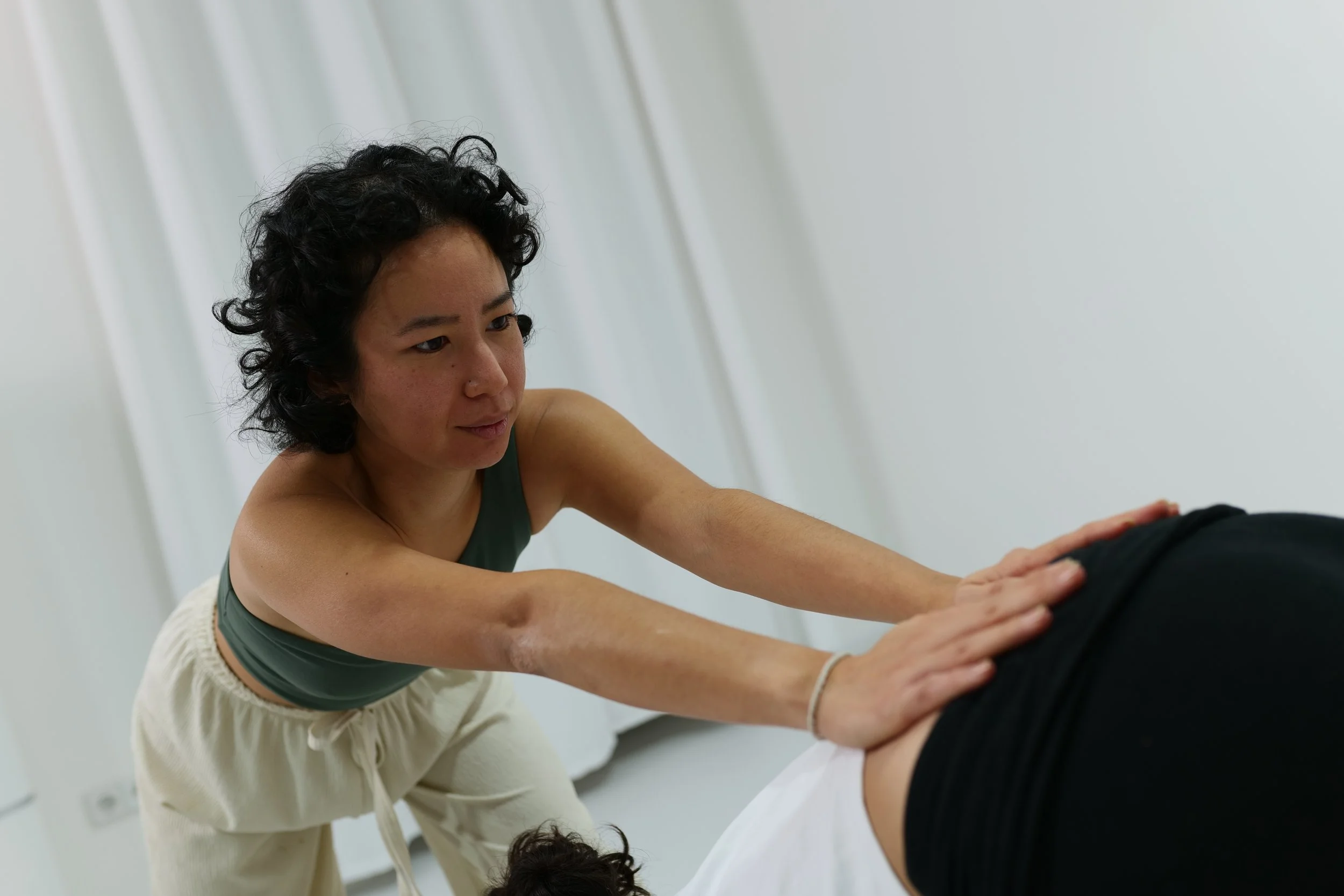
Exit the PMOS/PCOS Stress Loop
Yoga Therapy for women ready to go deeper
Not manage. Not cope. Recover.
Most PMOS treatment focuses on suppressing symptoms. The pill to mask the lack of cycle. Metformin for insulin. Anti-androgens for skin and hair. These treatments have their place, but none of them address why the symptoms keep coming back.
The symptoms create more stress. The stress worsens the symptoms. The loop continues.
Until something interrupts it, then your body starts to recover.
What is PCOS/PMOS?
PMOS (Polyendocrine Metabolic Ovarian Syndrome, formerly PCOS) is one of the most common hormonal disorders affecting women of reproductive age, estimated to affect between 8–13% of women worldwide. Yet up to 70% of cases go undiagnosed — partly because you don’t even need ovarian cysts to have PMOS, and the former name Polycistic Ovarian Syndrom suggested it as a main diagnose.
PMOS is characterised by hormonal imbalance, specifically elevated androgens (male hormones), disrupted ovulation and insulin resistance. But its effects reach far beyond the reproductive system, touching metabolic health, mental wellbeing, energy, sleep-wake cycle, mood and how a woman feels in her own body.
Symptoms can include:
Irregular, absent, heavy, or unpredictable periods
Fatigue, brain fog, and low energy
Mood swings, anxiety, and depression
Acne and oily skin
Excess hair growth (hirsutism) or thinning hair
Weight gain, especially around the belly
Insulin resistance and blood sugar fluctuations
Prolonged PMS-like symptoms: bloating, pelvic pain, headaches
Body image challenges and difficulty feeling at home in your body
The World Health Organization (WHO) recognizes the importance of integrating mental health care into PCOS management, because the emotional weight of the condition is real, significant, and too often overlooked.
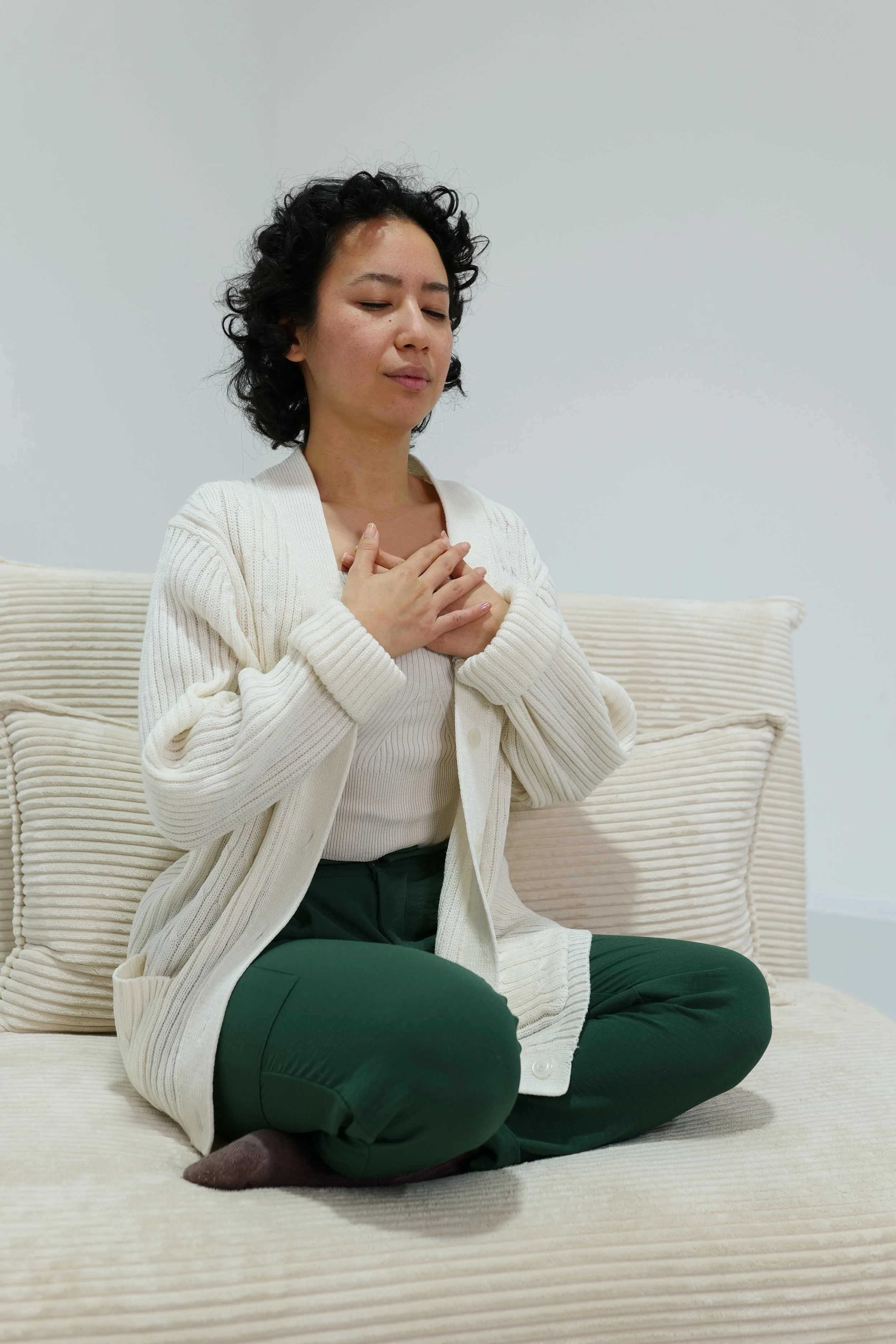
The Stress-Symptom Loop
Here’s something that doesn’t get talked about enough:
Chronic stress is one of the most significant aggravating factors in PMOS. When the nervous system is in a state of overdrive, it disrupts the Hypothalamus-Pituitary-Ovarian axis, the hormonal communication system at the heart of your cycle. Elevated cortisol drives androgen overproduction and worsens insulin resistance. Which deepens the hormonal imbalance. Which creates more symptoms. Which creates more stress.
“You wake up exhausted, already stressed. Your body feels heavy, almost sticky. You reache for coffee before you’re even properly awake. You brush your hair and again find clumps of hair in your brush. You grab something on the way out, rushing to work. On the bus, you scrolls through social media to avoid the spiral, the thoughts about your body, your cycle, whether any of this will ever change.”
If that morning sounds familiar you’re not alone. And you’re not broken. That’s the loop in action. And it’s exactly what my yoga therapy sessions are designed to interrupt.
Why conventional treatments often fall short
Modern medicine offers tools for managing PMOS: hormonal contraceptives, Metformin, anti-androgen medications. These can be important and genuinely helpful. But they share a limitation: they address what’s visible without touching the root.
None of these treatments ask: what is the body responding to? What does it need to feel safe enough to regulate itself?
That’s the question my work starts with.
What we work on together
My PCOS/PMOS support work combines yoga therapy, Hormone Yoga, and nervous system regulation to address PMOS at its roots: gently, sustainably, and entirely tailored to you.
A yoga therapeutic treatment for your PMOS may include:
Every session begins with what’s showing up for you right now, your challenges, your symptoms and your progress
Yoga therapy sequences to stimulate the endocrine glands and reproductive organs, build insulin sensitivity, and support the body’s natural rhythms
Hormone Yoga sequences specifically targeting and stimulating the endocrine glands (increasing estrogen levels up to 220%)
Nervous system regulation: bringing cortisol down, interrupting the stress-hormone loop, creating the internal conditions where PMOS has less to feed on
Deep guided relaxation Hypnosis that works at a subconscious level. This isn’t just rest. It’s the practice that helped me most in rebuilding a sense of safety in the body, reducing cortisol, and slowly shifting the relationship from fight to trust
Pranayama: Nadi Shodan, Bhramari, Sheetali. Ancient yogic breathwork practices that calm the nervous system, reduce inflammation, and regulate the emotional patterns that keep the loop going
Nutrition and lifestyle guidance rooted in anti-inflammatory principles and bloodsugar managment. Simple, sustainable, and never punishing
Meditation and journaling prompts to support self-esteem, body image and emotional wellbeing
Self-practice homework: because the real work happens between sessions, in the small daily choices that either feed the loop or help break it
This is an ongoing lifestyle shift, not a one-time fix. The loop took years to establish. It takes time to unwind, and that’s okay. What matters is that with each session, with each practice, you understand your body a little better than you did before.
Not sure if this is the right approach for you? Book a free discovery call and let’s talk!
Your first step. No commitment, just 90 minutes of being fully seen and supported.
You don't need to have it all figured out to begin. You just need to show up.
In our first session together, we start where you are. We talk about what's showing up in your body right now: your symptoms, your stress, your cycle. Then we work. A personalised yoga therapy practice and deep relaxation, built around what your nervous system needs today.
You'll leave with a clearer sense of what's happening in your body and one simple practice to take home.
90 minutes • Online • €60 (special first session price)
Sessions can be held in: German, English & Spanish. In-person in Berlin upon request, Online worldwide.
After booking you'll receive a link to schedule your session at a time that works for you.
Your first step. No commitment, just 90 minutes of being fully seen and supported.
You don't need to have it all figured out to begin. You just need to show up.
In our first session together, we start where you are. We talk about what's showing up in your body right now: your symptoms, your stress, your cycle. Then we work. A personalised yoga therapy practice and deep relaxation, built around what your nervous system needs today.
You'll leave with a clearer sense of what's happening in your body and one simple practice to take home.
90 minutes • Online • €60 (special first session price)
Sessions can be held in: German, English & Spanish. In-person in Berlin upon request, Online worldwide.
After booking you'll receive a link to schedule your session at a time that works for you.
A taste of the practice
In every PMOS support session, I include a guided deep relaxation practice that works at a subconscious level to reduce cortisol, support hormonal balance and rebuild self-compassion. Here is the intention we set:
“My body is healing and becoming stronger every day. I trust my journey and take care of myself with warmth and patience.”
This is the foundation of the work: not pushing harder, but creating the conditions for your body to feel safe enough to heal.
What starts to shift
The women I work with usually first start to notice:
More predictable cycles, sometimes for the first time in years
Steadier energy, the kind that doesn’t require coffee to function and doesn’t crash by midday
A calmer nervous system. Stress still happens, but it stops feeling so all-consuming
A different relationship with their body, less frustration, more curiosity and understanding
Clearer skin, better sleep, more stable mood
A practice they actually want to keep doing because it feels good, not because they have to
These aren’t promises. PMOS is complex and every body is different. But this is what becomes possible when the nervous system is no longer in overdrive.
Who this is for
You are in the right place if…
You’ve been diagnosed with PMOS/PCOS and you’re ready to go beyond symptom management
You’re exhausted by approaches that demand more from a body already running on empty
You want to understand what’s happening in your body, not just be told what to do about it
You’ve tried conventional treatments and feel something is still missing
You’re ready to commit to an ongoing practice, at your own pace
You’re ready for a gentler, more sustainable path
You believe your body has the capacity to find its own balance with the right conditions
You don’t have to navigate PMOS alone. Let’s find a way forward, together.
Choose your level of support
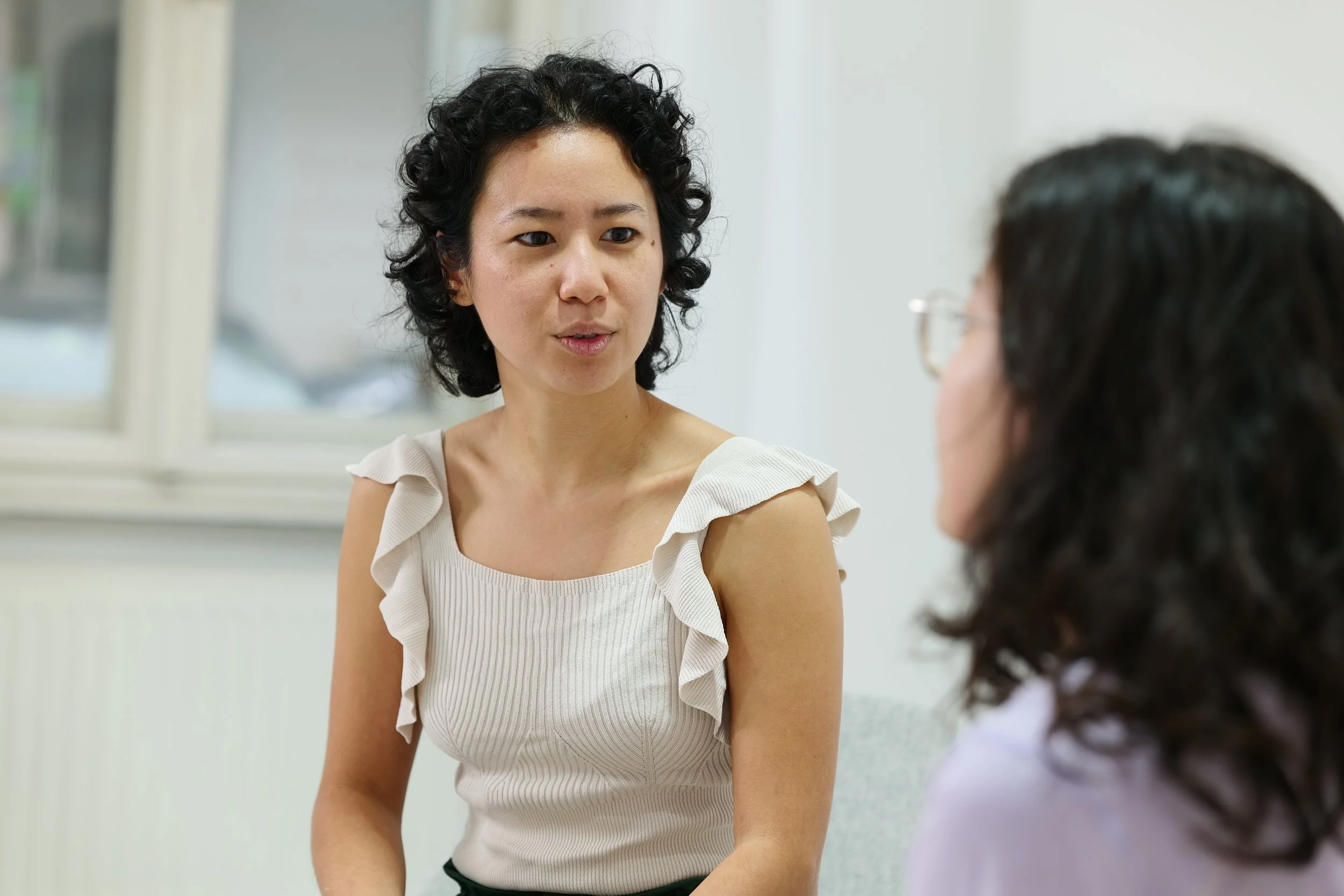
Three sessions to start feeling the shift. Enough to go deeper, notice what changes, and build something sustainable.
Real change doesn't happen in one session. It happens in the space between sessions, when your nervous system starts to remember what calm feels like.
Three sessions give us enough time to understand your specific stress-symptom pattern, work through it layer by layer, and build a self-practice that actually fits your life.
Most women notice their first real shifts within these three sessions: more steady energy, a calmer response to stress, a sense of being less at war with their body.
What's included:
— 3 × 90-minute personalised yoga therapy sessions
— Tailored self-practice homework after each session
— Session notes sent to you by email after each appointment
3 × 90 minutes • Online • €255 (save €15)
Sessions can be held in: German, English & Spanish. In-person in Berlin upon request, Online worldwide. Sessions can be scheduled weekly or fortnightly whatever suits your life.
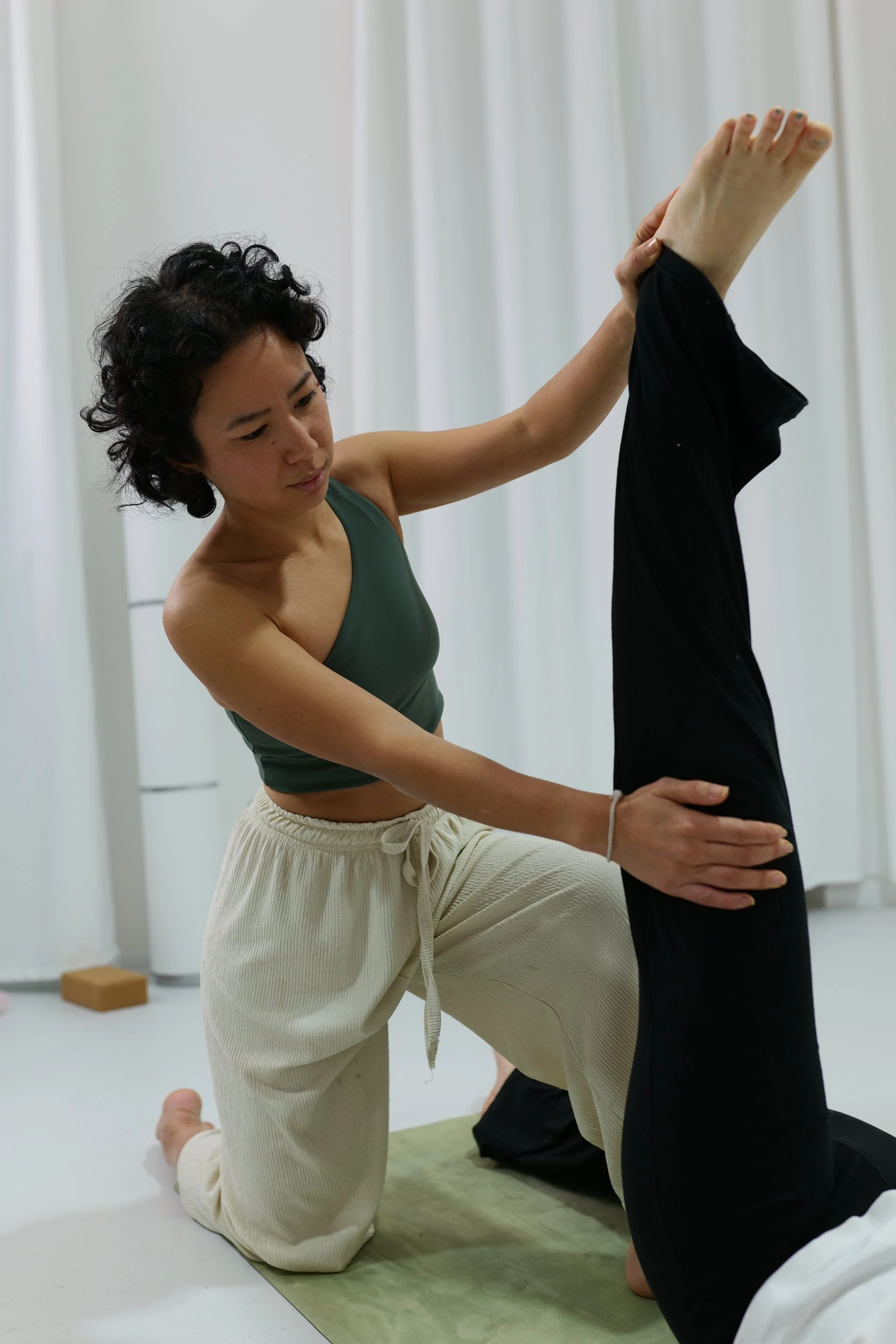
1:1 Yoga Therapy — Deep Work (6 Sessions)
Six sessions for lasting change, whatever shape that takes for you.
For PMOS, the stress-symptom loop took years to establish. Six sessions give us the time and depth to really unwind it. For perimenopause and menopause, six sessions give your nervous system the sustained support it needs to move through the transition with more ease, rather than white-knuckling through it alone.
This is where we go beneath the surface. I help you identify what's keeping your nervous system in overdrive, work through it session by session, and build the internal conditions your body needs, whether that's your hormones finding their rhythm again, or your body finding more calm within a transition that's already underway.
Women who complete this bundle consistently report steadier energy and a fundamentally different relationship with their body. For PMOS, that often includes more regular cycles. For perimenopause and menopause, women more often describe fewer or milder hot flushes, better sleep, and a greater sense of steadiness.
What's included:
— 6 × 90-minute personalised yoga therapy sessions
— Tailored self-practice homework after each session
— Session notes sent to you by email after each appointment
— A personalised self-practice plan to sustain your progress after we finish
6 × 90 minutes • Online • €480 (save €60)
Sessions can be held in: German, English & Spanish. In-person in Berlin upon request, Online worldwide. Sessions can be scheduled weekly or fortnightly whatever suits your life.
Recommended for women ready to commit to real, lasting change.
Let’s talk!
Whether you're ready to start your journey or still have questions about what this work actually looks like, I'd love to hear from you. Fill out the form below and I'll get back to you personally, usually within a couple of days.
If you'd rather talk it through first, book a free 30' call instead, sometimes that's easier than writing it all out.