1 Week of Hormone Yoga Training: What I Learned Beyond the Glands
I didn't go to Bad Meinberg to learn hormone yoga from scratch. I was already a yoga therapist working with women's hormonal health and PMOS/PCOS, including my own. I was diagnosed with PCOS 15 years ago, recovered my cycle and reversed my symptoms naturally, and that's what led me to become a yoga therapist in the first place. I went to Bad Meinberg because I wanted a deeper, more specialised layer to bring back to the women I work with in Berlin and what I found there was so much more than technique.
Before this training, I'd already spent years building a practice around PMOS and hormonal health. This wasn't a first encounter with the subject. It was a deliberate step further into it: new perspectives, more precise techniques, and a much closer look at the emotional side of hormonal chaos and transition (a part that rarely gets talked about alongside the physiology).
Why I Went to Yoga Vidya's Ashram in Bad Meinberg
Last week, I spent a week immersed in Hormone Yoga Teacher Training at Yoga Vidya's ashram in Bad Meinberg. 88 hours of training built on the Dinah Rodrigues method, but adjusted to the Yoga Vidya principles of sequencing. It wasn't a retreat. It was a full immersion: study, practice and living the rhythm of ashram life for a week straight.
Hormone Yoga by Dinah Rodrigues is a genuinely different practice from general yoga therapy for the endocrine system. It combines dynamic movement with energetic work specifically to target the hormone-producing glands, and it was originally developed for women in menopause navigating dropping estrogen levels. PMOS/PCOS involves a different picture (anovulatory cycles that are, among other factors, linked to low estrogen) but the underlying glandular work overlaps closely so that the method translates well.
My Yoga Therapy training in an Indian Ashram, by contrast, worked with the endocrine system as a whole: the central role cortisol plays across hormonal imbalance, and a 1:1, holistic approach that includes breath, movement, deep rest, nutrition, lifestyle and mindfulness. It gave me the wider picture, but wasn't as targeted on the glands themselves. This is why the two trainings complement each other really well. Hormone Yoga brought a new layer of precision working directly with the glands, and going deep into the emotional dimension of menopause specifically. Together, they've expanded the ways I can now support women.
What a Week at the Ashram Actually Looked Like
The days started at 6am and didn't end until 10pm. No gentle retreat pacing here this was a full, structured immersion.
By day 3 or 4, my body was starting to catch up with the new biorhythm but I missed my go-to PCOS breakfast more than I expected to . There was an unexpected relief in not choosing how to spend the day; with the schedule set for you, decision fatigue simply disappears. The days were full of genuinely interesting things. But being surrounded by people for that many hours, every day, for a full week, wasn't always easy, no matter how wonderful the other women were.
My favourite moment of the whole week was our morning sun salutations. Our teacher sat at the harmonium, singing mantra live, and each verse carried us into the next pose. We moved through the sequence as synchronised choreography, the whole room breathing and flowing to the same live chant. It was beautiful, and it felt genuinely special. With each round, I felt more connected to every woman in that room, my heart opening a little further. I teared up more than once.
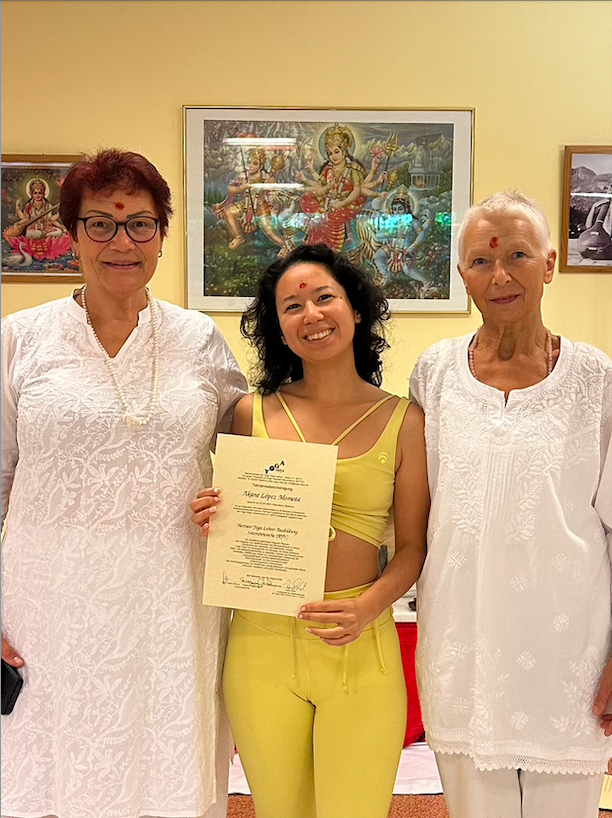
After a beautiful Devi (Goddess) Ceremony I received my certification as a Hormone Yoga Teacher
What I Learned Beyond the Endocrine System
Going in, I expected to deepen my knowledge of glands, hormones, sequences. And I did. But the biggest learning wasn't physiological at all: it was about community.
Between the practices, we spent hours in workshops and lectures that went beyond theory. We discussed, we shared our own experiences and we learned from each other as much as from the teachers. I didn't just come home with a deeper understanding of Hormone Yoga. I came home having gotten to know 16 women, each carrying her own perspective on womanhood, her own relationship to her cycle, her own version of hormonal chaos or change. Hearing sixteen different stories of the same broad territory was its own education and a reminder that there's no single "normal" way to move through hormonal health.
That's what I now build into every class I teach: hormonal health isn't just a solo, internal project. It happens in connection too.
We also spent real time on the seasons of womanhood, and how differently each of us flows through them. Not every body follows the same rhythm, the same cycle, the same timeline into perimenopause or menopause. Part of guiding women through Hormone Yoga is helping them notice their own season and meet it with curiosity instead of resistance, rather than measuring themselves against someone else's.
I didn't come home having learned hormone yoga from zero. I came home with a deeper, more precise practice, a fuller picture of the emotional side of hormonal health, and sixteen new perspectives on womanhood, and that's what I now bring back into the classes I teach in Berlin.
What Is Hormone Yoga, Exactly?
Hormone Yoga Therapy is a specialised practice developed by Brazilian psychologist and yoga therapist Dinah Rodrigues. It combines dynamic yoga sequences with targeted breathing techniques and energy-directing exercises designed to stimulate the hormonal glands: the ovaries, thyroid, adrenal glands and pituitary.
Unlike a general yoga class, Hormone Yoga is precise and therapeutic. It's built to support women navigating hormonal imbalances and transitions: PMOS, perimenopause, menopause, or the kind of low-grade hormonal disruption that everyday stress can cause on its own.
Hormone Yoga works on multiple levels at once:
Stimulating the endocrine glands through specific movement and breathwork sequences
Regulating the Hypothalamus-Pituitary-Ovarian (HPO) axis — the hormonal communication system at the heart of your cycle and reproductive health
Improving circulation and energy flow through the pelvis and reproductive organs
Supporting insulin sensitivity through regular movement
Building emotional resilience and body awareness
Who Hormone Yoga Is For
PMOS (formerly PCOS). Hormone Yoga can support hormonal balance, menstrual regularity, insulin sensitivity, and overall wellbeing.
Perimenopause. The practice can ease hormonal fluctuations by supporting the endocrine system and reducing stress. Many women notice better sleep, more even energy and more emotional steadiness.
Menopause. Hormone Yoga was originally developed to support women through menopause, and is known for easing common symptoms like hot flushes, mood changes, and fatigue.
Stress-related hormonal imbalance. Chronic stress disrupts communication within the endocrine system. Hormone Yoga combines movement, breathwork, and relaxation to calm the nervous system and support healthy hormone function even without a diagnosis.
Why yoga alone isn't enough & what I do differently
What I found, both in my own body and later in the women I've worked with, is that the yoga sequences on their own aren't enough. The nervous system has to be part of it.
That's why I integrate the Dinah Rodrigues method with nervous system regulation, deep relaxation, mindfulness and pranayama. When both are addressed together, the shifts go deeper and they last longer.
The goal was never just hormonal balance. It's a body that feels like home.
Practicing Hormone Yoga in Berlin
I now teach a biweekly class called "Hormones & Emotional Release" at SHALA Studios, alongside private sessions — combining what I learned at the ashram with everything I've since studied in yoga therapy and nervous system regulation, and bringing that same sense of community into class. Hormonal health doesn't have to be a solo project.
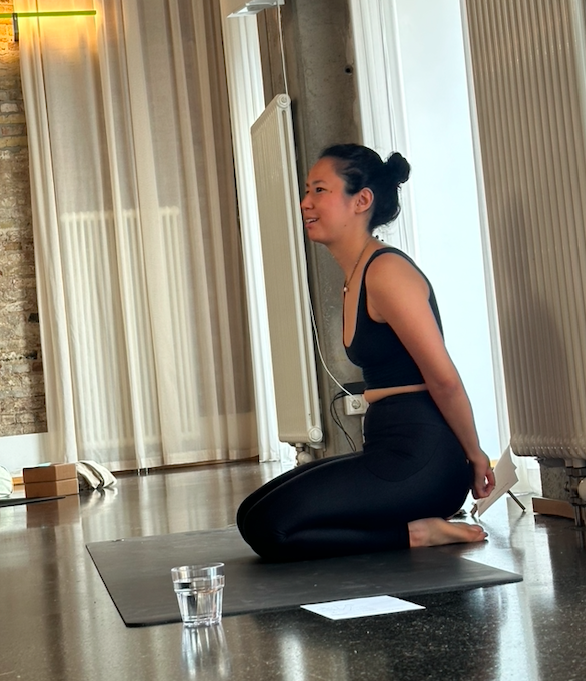
Teaching “Hormones & Emotional Release” at SHA-LA Studios Waterfront in Berlin.
If you're curious whether Hormone Yoga is right for where your body is right now, you can book a free 30-minute call or check out my next group events in Berlin.
Frequently Asked Questions
Is Hormone Yoga different from a regular yoga class? Yes. Hormone Yoga is a therapeutic, targeted practice designed to stimulate specific hormone-producing glands, rather than a general movement or flexibility class.
Is Hormone Yoga safe if I have PMOS/PCOS? Hormone Yoga was developed with women's hormonal health in mind and is widely used to support PMOS. As with any new practice, it's worth checking in with your doctor if you're managing a diagnosed condition, and working with a trained teacher.
How often should I practice Hormone Yoga? For visible results, I recommend activating each gland at least 4x per week. Realistically, 3–5x a week works well, and more is even better if you have the time. A full round targeting each gland once takes about 20 minutes, so it's a manageable daily habit rather than a big time commitment — though you can also do the fuller series when you have more time.
Where can I learn Hormone Yoga in Berlin? I teach a biweekly class called "Hormones & Emotional Release" at SHALA Studios, as well as private 1:1 sessions. You can see upcoming classes here or book a free call to talk through what would suit you.